
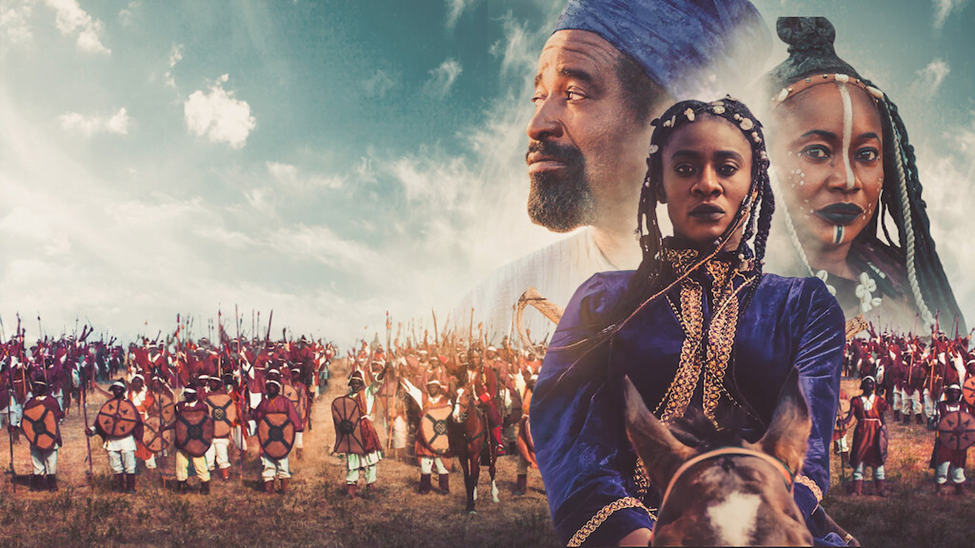
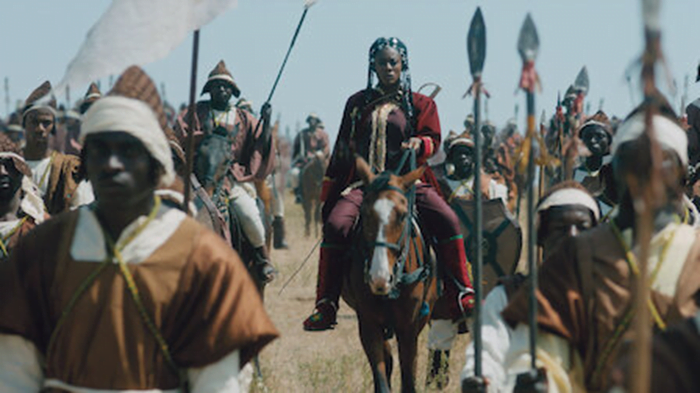
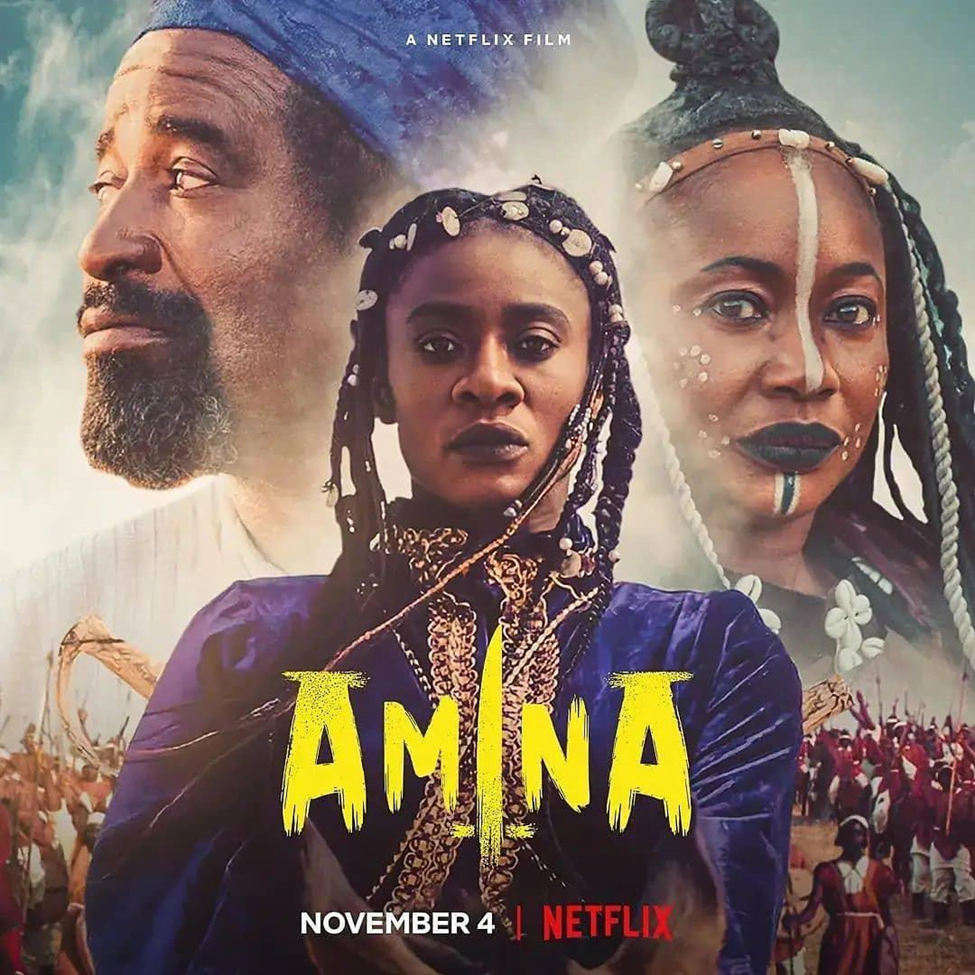
Amina, released in 2021, is based on the story of the legendary Amina of the Zazzau Kingdom of the 16th century, which is present-day Zaria city in Kaduna, Nigeria. She was noted as a woman warlord, conquering kingdoms and expanding territories during her rule. Her territorial expansion, fierceness in war, and the fact that she was a ruling queen—an unusual and unheard-of phenomenon—made her story of legendary significance. Though there are variations of Queen Amina’s story, the most important, painstakingly documented in different mediums, is the uniqueness of her exploits as a female gender in a patriarchal society.
Storyline
The Amina revolves around royal treachery, territory expansion, and rulership. Amina opens with a spectacle ring fight between the conquered prince Danjuma of Igala and Kabarkai, the best soldier in the Zazzau kingdom, who is believed to be aided by the supernatural power of his mother, a priestess named Zumbura, who lives in the mountain caves of Tukur Tukur.
Prince Danjuma is jailed for causing Kabarkai to lose his sight. Amina, being the favorite daughter of the king, sees the unfairness and injustice. She requests that Aladi Ameh, Prince Danjuma’s cousin and the Igala Regent’s daughter, be released to live in the palace. She also requests, to the king’s dismay, that she should be trained by Kabarkai in the ways of war.
With his eyes on the crown to become the Sun of Zazzau and husband to Amina, the Madaki fights his way through treachery, conspiracy, and bribery. He liaises with the Regent of Igala and begins to unfold his plan to take over the seven kingdoms of Zazzau. Amina, on the other hand, receives spiritual guidance from Zumbura, the priestess, who shows her through the caves of the mountain that it is her destiny to lead wars and conquer territories—a bloodshed task that exposes her loved ones to the detriment of death. How does she overcome her obstacles and fulfill her path in life? Who wins? The Madaki or Amina? You should see the movie “Amina” for her legendary tale.
Characterization and Cast
Written by Okey Ogunjiofor and Frank Uba, and directed by Izu Ojukwu, the characterization does not live up to the expectation and gravity of the legendary Amina being talked about. The acting is not as intriguing, leaving the audience wanting more. The cast features Lucy Ameh, Ali Nuhu, Clarion Chukwura, Chris Gbakann, Ibrahim Mijinyawa, Yakubu Mohammed, Habiba Ummi Mohammed, Asabe Madaki, Jenevieve Ogunjiofor, Godwin Ogaga, Emmanuel Degri, Abdul Mohammed, and Victoria Nweke. One would have expected more from the actors but they delivered according to their prowess.
Setting and Embellishments
The setting and props seem inadequate for such a cinematic production. The embellishments, such as traditional musical accompaniments, chants, and war songs, add to the aura of the movie.
Dialogue
It’s surprising that apart from the Hausa names, all conversations are in English. Considering the time and society being depicted, the Hausa language or a code mix would have been more appropriate for such a cultural production. A recurring loophole is the fact that some Hausa names or words have variations in some actors’ pronunciation, which makes them seem unprepared.
Amina reflects the Hausa society of the 16th century, and most importantly, the deeds and dignity of Amina as a female warrior and queen of the Zazzau kingdom.