
Eleshin Oba: The King’s Horseman is an adaptation of Wole Soyinka’s Death and the King’s horseman, based on a true-life event during World War II in 1943, in Oyo, Nigeria. According to the tradition, after the death of a king, the designated Eleshin Oba for the king’s reign must accompany him (the king’s spirit) in afterlife. This is a suicidal ritual that must follow the king’s death and it is the destiny of the chosen Elesin Oba to fulfil. It is otherwise known as Abobaku which means the one that dies with the king. In Elesin Oba: The King’s Horseman, it’s been 30 days the King died and it is the night for the Elesin Oba to carry out the ritual rites.
Storyline
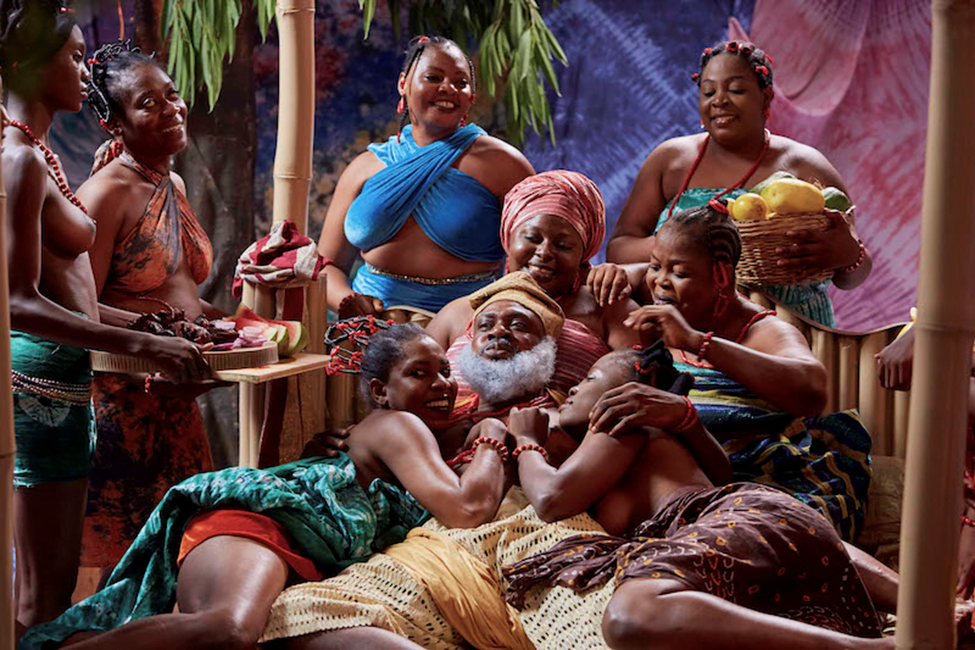
The Elesin Oba is ushered in with a significant drum beat, chants goes ahead, announcing the prominence of Eleshin Oba and the importance of the ritual that is about to happen. Elesin Oba is graced with women, attending to his sexual pleasures as arrays of breast and buxom women surrounds him. Before his death, Elesin Oba is offered all form of enjoyment without denial.
He enters the market square in grand style as of a king, welcomed and admired by all. Elesin Oba sees the market as home and the market women as the high place where his journey to afterlife begins to his forefathers.

After reiterating his commitment to joining his King in afterlife, he becomes attracted to an about-to wed virgin who is being cheered on by her age group. He demands for her as his last wish before afterlife. Iyaloja. Iyaloja forewarns Eleshin Oba regarding the seed he wishes to leave behind. The colonial district officer is tipped off by Amusa, a native of the Oyo land who also is a sergeant regarding the ritual. Thinking the act is barbaric, the district officers order the arrest of Elesin Oba during his transition rites.
Olunde, ready to perform the death rites of his father (the Eleshin Oba) comes home from the Whiteman’s land. Disappointed that his father, the Elesin Oba cowardly chose pleasure over his ancestral duty, he offers himself instead.
Cast/ Setting
The setting of the movie excellently replicates the cultural and traditional expectations of such historical event as that of the Elesin Oba.
Written and directed by Biyi Bandele, the cast features Odunlade Adekola, Shaffy Bello, Deyemi Okanlawon, Mark Elderkin, Jenny Stead, Omowunmi Dada, Jide Kosoko, Kelvin Ushi, Langley Kirkwood and Olawale Olofooro ‘Brymo’. One wouldn’t quite see the importance of Oloun Iyo or one would expect more until later at the end of the movie. The actors perform in their elements, nothing short of expectation.
Dialogue
Dialogues are essential part of relating the theme or essence of a movie. In the case of Elesin Oba: The King’s Horseman, every conversation is enriched in Yoruba language; in idioms and proverbs. The chorus, eulogy and wedding songs contribute to the dialogue and actions in the movie. The back and forth between Olunde and Jane, Simon and Iyaloja are part of the core anti-colonial narrative depicted in the movie.
A confusing and questionable scene is the cell scene, when Elesin Oba and the district officer Simon could trade words in different languages as though they are conversing in same language. The same happens when Iyaloja comes to the cell and conversed with the Whiteman without interpretation.
In conclusion, Elesin Oba: The King’s Horseman is a cinematic preservation of what can be called a Yoruba canonical event in history. It tells a story of human frailty, being susceptible to pleasure and dignity and honour for communal beliefs.