
Theatre has long served as a mirror to society, reflecting its complexities, challenges, and aspirations. At the Lagos International Theatre Festival (LITF), an annual celebration of creative excellence, African Film Reviews capture High, Dear Kaffy: Diary of a Single Woman in Lagos, Anatomy of a Woman, and The Call and these narratives are herein reviewed. Each of these productions tackled societal issues such as adolescence, relationships, womanhood, and faith, offering audiences a chance to confront the realities of peer influence, societal pressures, and the search for identity. These plays excelled in engaging storytelling, masterful direction, and compelling performances.

High
High tells the story of Kayode and his friends, whose reunion after attending different high schools spirals into a series of tragic events that alter the course of their lives. The play highlights the importance of parental guidance while addressing its flaws and lapses. Through its narrative, High offers a witty yet thought-provoking perspective on issues such as drug abuse, social media addiction, and teenage angst.
The story begins with the Balogun family, where Mr. Balogun expresses his disappointment over Kayode’s poor academic results. Frustrated, he forbids Kayode from mentioning his grades to their guest, Dr. Festus, an old-time friend. Meanwhile, Kayode reconnects with his friends—Cyprian, who prefers to be called Ryan; Lami, a bookworm; Julius; and Memunat. Their reunion soon becomes the foundation of the play’s conflict.
Kayode returns home drunk after the gathering and misbehaves in front of Dr. Festus, who diagnoses him with substance abuse and recommends rehab. At the same time, Lami begins tutoring Ryan, the spoiled son of wealthy but inattentive parents. Despite Kayode and Lami having feelings for each other, Kayode’s absence and Ryan’s presence lead Lami to develop an infatuation with Ryan. Memunat complicates matters by stealing a phone Ryan had intended to give Julius, leading to Julius being falsely accused. When Lami shares news of her budding relationship with Ryan, Memunat strongly opposes it.
At rehab, Kayode is influenced and brainwashed by others. He begins dealing drugs and, in his search for the person who drugged him initially, exposes Ryan to Slow, a drug addict. Kayode later learns from Lami that Ryan is now her boyfriend. Under Ryan’s influence, Lami experiments with drugs, escalating the play’s conflict. The situation reaches its climax when rehab authorities discover Kayode’s involvement in drug dealing with another addict, whose life is now at risk. The police are called, forcing Kayode to flee. He reconciles with his best friend, Julius, and together they visit Ryan’s house to uncover the truth.
An intense confrontation ensues, during which Ryan’s mother reveals she is going through a divorce. Meanwhile, the Balogun family arrives, leading to a chaotic fight. Amid the turmoil, Lami collapses and dies from a drug-related cause. This tragic event serves as a moment of reckoning for everyone. Memunat confesses that she had spiked Ryan’s drink out of anger over their past sexual encounter and his subsequent treatment of her. However, it was Kayode who unknowingly consumed the drink, leading to his spiral into drug addiction and eventual involvement in the drug trade. Ryan, wracked with guilt, admits to introducing Lami to unprescribed drugs under the pretext of helping her concentrate on her studies.
Directed by Temi Ami-Williams and written by Osang Abang, High is a poignant exploration of peer pressure and its impact on adolescents. The play examines the influence of parenting on the choices children make, highlighting both strengths and failures. Produced by Maggie Osuome and Road14Studios, the cast delivers compelling performances, bringing the characters to life with clarity and precision. The setting and stage coordination are seamless, enhanced by digital scenery that immerses the audience in the story and blurs the lines between stage play and film.

Dear Kaffy: Diary of a Single Woman in Lagos
Dear Kaffy: Diary of a Single Woman in Lagos follows the lives of three single Nigerian women aged 34 to 41 as they navigate the challenges of finding love. Through a four-part series, the play explores the sacrifices they make in their search for “the one.” Staged during LITF 2024, one of the series chronicles Kikelomo’s struggles to find true love in Lagos at the age of 35.
Kike’s journey begins with Femi, a man she gives her all to, only to discover he is unfaithful. Despite her loyalty, Femi repeatedly cheats on her, leaving Kike to treat multiple STIs. Their relationship ends after a heated confrontation. Next comes Emeka, a wealthy and generous man who lavishes Kike with love, money, and attention. However, her happiness is short-lived when she discovers Emeka is married with six children living in Italy.
Tamuno, a gym instructor, enters Kike’s life next. She accommodates him in her home, and they live like a couple. However, Kike’s father, Chief Olota, disapproves and insists she introduce Tamuno to the family or face an arranged marriage. On their wedding day, Tamuno shocks everyone by failing to show up. Kike returns home to find him at the gym, indifferent to the situation. Their relationship ends after another argument.
Exhausted by failed relationships, Kike agrees to a matchmaking effort by her family. The arrangement seems promising until Tamuno returns, begging for forgiveness. They share a moment of weakness and have sex, but Kike regrets it when her match learns of the incident. Her attempts to explain fall flat, and the match leaves her.

Directed by Bolanle Austen-Peters and produced by BAP Productions, Dear Kaffy is a contemporary play reflecting the challenges many women face in relationships. Featuring Nollywood stars such as Yvonne Jegede, Jide Kosoko, and Uzoma Oluchi Osimkpa, the play brings its narrative to life with vibrant performances. Contemporary Afrobeat tracks by artists like D’banj, Asake, and Chike, along with thematic songs, enhance the story’s emotional depth. The costumes and stage design, rooted in Afro-modern Yoruba aesthetics of the late 20th century, add to the authenticity of the play’s setting.

Anatomy of a Woman
Produced by Nevana Productions, Anatomy of a Woman delivered a powerful and deeply moving performance that explored the complexities of womanhood and societal pressures. The play masterfully delves into the intricate desires and expectations faced by a young woman named Bolatito.
Bolatito’s story unfolds as her ex-boyfriend, Mohammed, unexpectedly reappears in her life. He hopes to reignite their past relationship, adding emotional tension to her already challenging circumstances. At the same time, her boss’s extreme generosity hints at a hidden agenda, creating a professional dilemma for Bolatito. To complicate matters further, James, a new suitor, proposes to her without any substantial communication about their mutual desires and intentions, leaving her uncertain about the future.
As Bolatito navigates these complex relationships, she grapples with her desire to define her own path. She dreams of a partner who will accept her for who she is and allow her the freedom to pursue her goals. The audience witnesses Bolatito at a crossroads, weighing the probable outcomes of her choices against the reality of her circumstances. Her struggle to balance societal expectations with personal ambition serves as the central conflict of the play, culminating in a poignant examination of her identity and desires.
Written by Wole Oguntokun and directed by Austine Onuoha, Anatomy of a Woman is a thought-provoking piece that invites audiences to reflect on life’s difficult choices. The talented ensemble cast, including Goodness Emmanuel, Uche Chika Elumelu, Korede “Korex” Ajayi, and Henry Diabuah, brings depth and authenticity to the characters. Their performances vividly capture the emotional nuances of Bolatito’s journey, leaving a lasting impression on the audience.
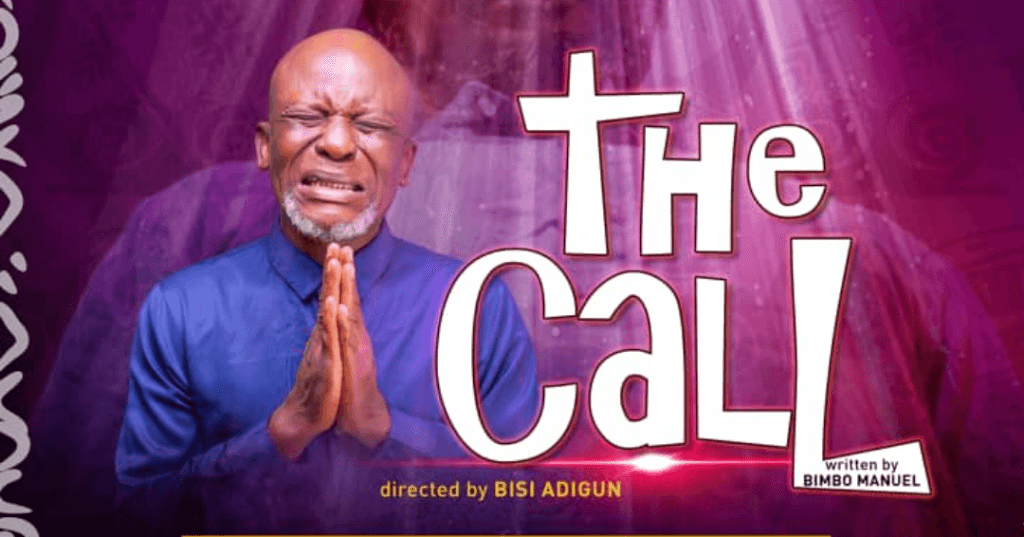
The Call
The Call deconstructs the idealism surrounding the concept of the call and the voice of God, offering a thought-provoking and humorous perspective on faith. The play chronicles the life of Oluwatosin, a minister of God who believes that his service to God should exempt him from poverty and mundane work, such as serving drinks at a lounge.
Driven by his zealousness, Oluwatosin prays fervently for financial upliftment, referencing Jabez’s story from the Bible. During one of his erratic prayers, God is depicted to be physically present in his room, engaging in a dialogue with him. Their interaction reveals Oluwatosin’s self-righteous stance and misconceptions of God’s person. Through biblical allusions, such as the story of Jonah, God rebukes Oluwatosin and assigns him the task of mentoring Gideon, a troubled man with a greater purpose using the Ten Commandments.
The two-character play skillfully balances humour and reverence, challenging conventional religious ideologies. It questions the notion that being a servant of God guarantees prosperity and quick answers to prayers. Instead, the play portrays God as approachable and willing to engage with humanity on a personal level.
Directed by Bisi Adigun and written and produced by Bimbo Manuel, The Call stars Toyin Oshinaike, who commands the stage with precise actions and expressive dialogue, and Ropo Ewenla, who provides the compelling voice of God. Their performances bring the narrative to life, offering a fresh perspective on spirituality and faith.
As part of the Lagos International Theatre Festival’s diverse lineup, High, Dear Kaffy: Diary of a Single Woman in Lagos, Anatomy of a Woman, and The Call exemplified the transformative power of theatre. From the struggles of adolescence to the pursuit of love, self-definition, and spiritual fulfillment, these productions provoked thought, challenged conventions, and inspired empathy. Their exploration of universal themes resonated deeply with audiences, bridging the gap between art and real-life experiences. The outstanding contributions of their directors, writers, actors, and production teams ensured each play left an indelible mark, fostering reflection and discussion about the societal and personal issues they highlight.