
The Cleaner Returns Dirtier, Deadlier, and Still Undone
Just when we thought we had seen it all with Zenzi Mwale in Unseen Season 1, the second season returns with a darker, more complex twist, reaffirming Unseen as a standout in African crime cinema. A gripping continuation of suspense, vengeance, and moral entanglements, Unseen Season 2 deepens the grit, strengthens the tension, and still manages to keep viewers questioning, “How far is too far for justice?” Created by Travis Taute, Daryne Joshua, and Gambit Films, this South African Netflix gem pushes its own boundaries while drawing us deeper into Zenzi’s crumbling world.
Storyline
Unseen season 2 picks up with Zenzi still in pursuit of the truth, but the stakes are higher and the enemies more vicious. No longer the disregarded cleaner, Zenzi is now the notorious serial killer feared across the underworld. Her brief, emotionally charged reunion with her husband Max results in an unexpected pregnancy, a complication that both weakens and strengthens her resolve.
Unseen season 2 tracks Zenzi’s attempt to stay ahead of both the police and the Syndicate while battling the ever-present grief of loss, the danger of betrayal, and the hope of a new life. With growing suspicion around her, Zenzi finds herself both aided and hunted. Naledi, her sister, and a few others believe in her story, but their support comes at great cost. It becomes almost inevitable that anyone who chooses to help Zenzi either dies or is caught in the crossfire. Despite it all, Zenzi is determined to protect her unborn child, the last spark of hope in her collapsing world.
From daring escapes to deeply emotional confrontations, this season is a continuation of turmoil wrapped in suspense and driven by resilience. The ending? Let’s just say it’s far from over.
Cast/Characterization
The cast, again, delivered. Gail Mabalane (Zenzi) cements her position as a leading force in African cinema with her subtlety, rage, and tenderness all compellingly conveyed. Dineo Langa (Naledi) steals several scenes with her emotional depth, fiery loyalty, and sharp expressions. Mothusi Magano (Lufuno), who previously lingered in the shadows, rises powerfully into a more central role. He embodies Lufuno with a quiet yet commanding presence, bringing together bravery, curiosity, and compassion in ways that elevate both the character and the story. His portrayal adds nuance to the narrative and provides a necessary contrast to Zenzi’s relentless pursuit of vengeance. The supporting cast, including new faces and returning characters like Brendon Daniels (Raymond) and Erica Wessels (Detective Visser), also impress. Wessels brings a sharp edge to her role as a corrupt and conflicted cop, delivering an unsettling performance that perfectly mirrors the show’s moral ambiguity.
Blindspot/Loopholes
Despite its strength, the season is not without flaws. At some points, the pacing feels rushed and slightly predictable. The character arc of Detective Morkel is jarring—one moment he’s an ally, the next a threat—with little emotional or logical progression. The sudden twist involving Dawn’s alliance feels forced and lacks buildup, raising questions about trust and believability in an otherwise calculated plot. Despite Lufuno casting doubt on her current day integrity, she was still depicted as a ‘trusted ally’.
Setting
The settings remain true to the socio-political undercurrents of South Africa’s urban underbelly. The tension is heightened with locations that are both familiar and hostile—underground hideouts, police stations, and run-down flats—all tying into the themes of vulnerability, crime, and corruption.
Cinematography
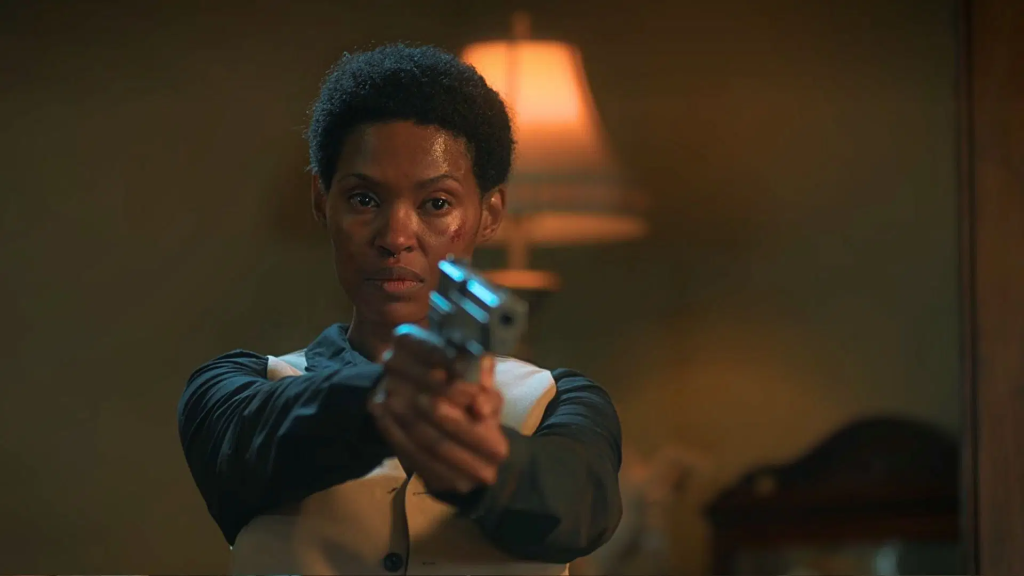
Just like the first season, the camera work is intimate and intentional. From tight close-ups that catch every flicker of emotion to wide shots that show Zenzi’s isolation in a world turned against her, the cinematography supports the narrative’s mood with impressive precision. Whether it’s a bloody hallway, a quiet safehouse, or a cliff-edge confrontation, every frame tells a deeper story.
Dialogue/Language
The bilingual delivery—English and local South African dialects—continues to give the show cultural weight and authenticity. The aesthetic design remains raw and real, especially in the scenes involving violence, abandonment, and secrecy. The costume and makeup choices subtly reflect the mental and emotional state of characters. Zenzi’s clothing, for example, grows darker and more functional with each episode, mirroring her descent into survival mode.
Season 2 of Unseen is not just a continuation, it’s a transformation. Zenzi’s evolution from house cleaner to calculated avenger is both terrifying and tragic. Yet, the real question remains: Is she winning, or just surviving? And in a world where even your own shadow can betray you, what does victory look like? The final scenes leave us wanting more, and clearly, this isn’t the last we’ll see of Zenzi Mwale.