
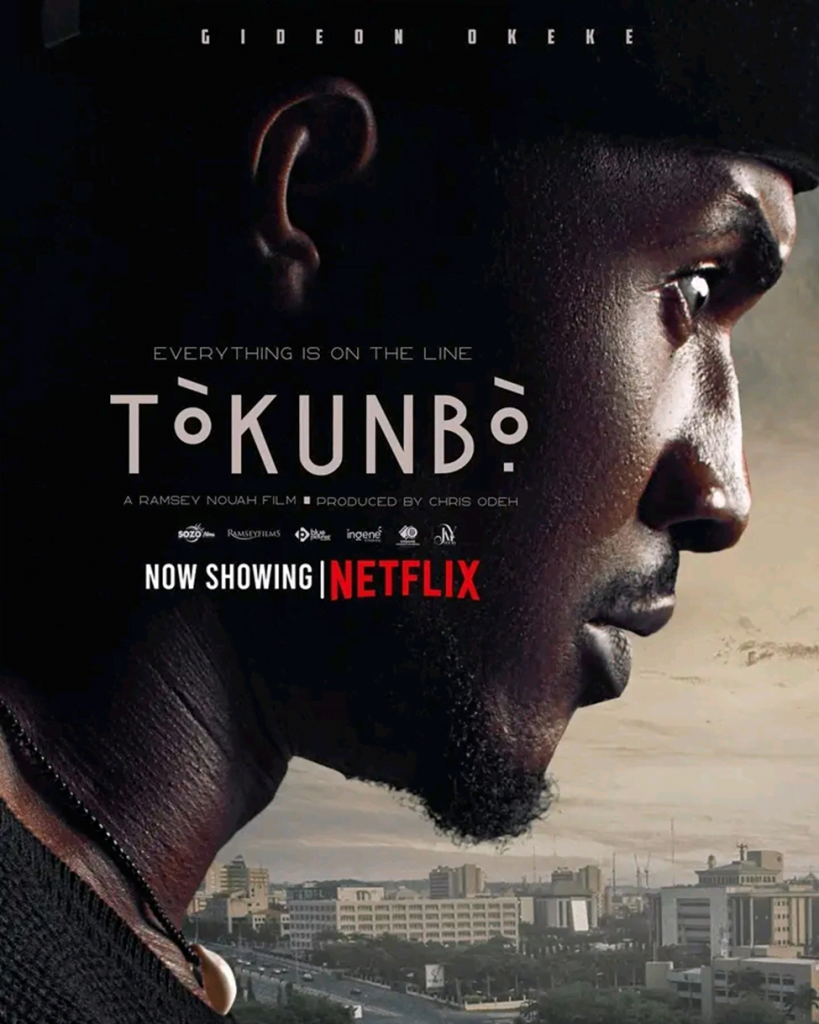
The word Tòkunbò is a Yoruba term that translates to “coming from overseas.” It commonly refers to items or products imported or smuggled into Nigeria. Additionally, the Yoruba people often name a child born abroad Tòkunbò. This background gives a well-known meaning to the word, so the movie titled Tòkunbò immediately hints at its likely subject matter.
Storyline
Tòkunbò tells the story of a man named Tòkunbò, who struggles to abandon a life of crime and corruption to embrace the responsibilities of fatherhood when faced with life’s challenges. The opening scene introduces the audience to Tokunbo as a car smuggler, embarking on his final deal. After leaving the criminal world, he finds himself in dire financial straits. Desperate, he turns to the notorious Gaza, known for exploiting and dehumanizing those who seek his help or cross him. The situation escalates when Tokunbo is tasked with delivering a package that includes cocaine and the kidnapped daughter of the Central Bank Governor. He becomes entangled in a power struggle between the Governor and her treacherous deputy, who orchestrated the abduction. Tokunbo’s wife and son are kidnapped, and in the midst of fleeing from law enforcement, his child dies, and he is captured by Gaza. The tension rises: will Gaza exact his revenge, or will justice prevail? You’ll have to watch the movie to find out!
Blindspot
Tòkunbò begins by highlighting the risky life of a car smuggler who not only bears the name Tòkunbò but also makes his livelihood dealing in Tòkunbò cars. The audience is led to expect a storyline centered on the popular interpretation of the name Tòkunbò. However, after the initial scene involving car smuggling, the connection to the movie’s title becomes tenuous. The plot shifts away from its eponymous implication to a narrative focused on kidnapping and power struggles, flattening the story into a typical Nollywood crime drama of abductions and gang rivalries. This shift squanders the potential to create a fresh narrative rooted in Nigeria’s social structure by fully exploring the meaning of Tòkunbò.
Moreover, certain important scenes that could have heightened suspense and engaged the viewers are presented too simplistically. For example, the scene where the Central Bank Governor’s personal assistant is caught aiding the orchestrator of the kidnapping is straightforward, with no prior suspense leading up to the discovery. The element of suspense is further diminished when the Deputy Governor’s call is received, and the ensuing dialogue leaves little to the imagination. Additionally, the commissioner of police and his tech team are depicted as inept, lacking convincing technology to support their roles. Tokunbo’s capture by Gaza is left to the audience’s imagination. These scenes could have been more juicily developed and effectively portrayed.
Finally, to compound the dullness that often accompanies portrayals of hooliganism and gangsterism in Nollywood, the fight between Gaza and Tokunbo is unnecessarily prolonged.
Cast and Characterization
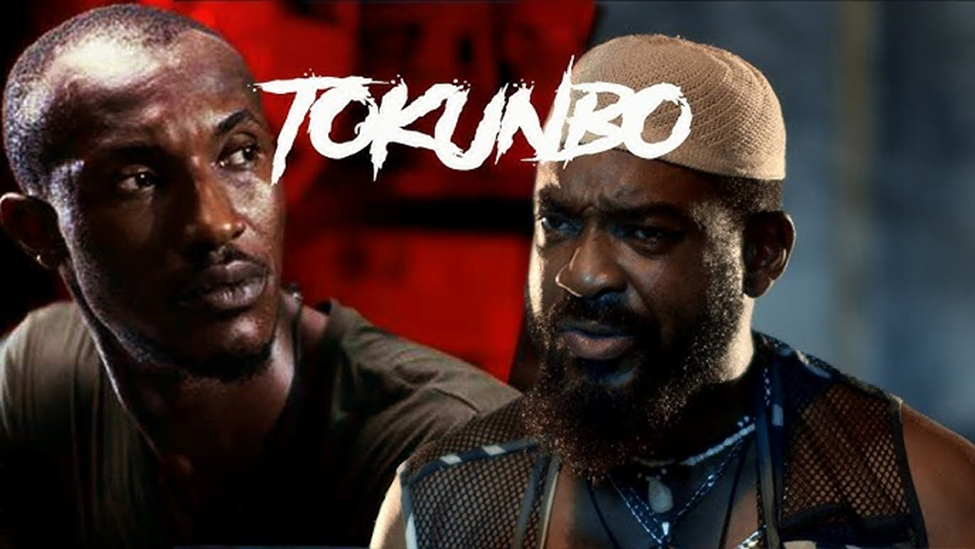
Written by Todimu Adegoke and Thecla Uzozie, and directed by Ramsey Nouah, Tòkunbò features notable actors and actresses who bring their characters to life, delivering performances that meet audience expectations. However, many of the actors are known for specific roles, leading to stereotypical portrayals that align with viewers’ usual expectations. The cast includes Gideon Okeke as Tòkunbọ̀, Norbert Young as ASP Salim, Chidi Mokeme as Gaza, Funlola Aofiyebi-Raimi as Folashade, Darasimi Nadii as Nike, Chibunna Stanley (Funny Bone) as Chukwudi, Majid Michel as Raymond/Agba, Adunni Ade as Iya Mulika, Ivie Okujaye as Aziba, and many others.
Setting and Cinematography
The cinematography deserves recognition for its excellent camera work, particularly in the scenes depicting Tokunbo’s ordeal. As with many Nollywood films, the setting extends beyond the physical location of the movie set. In Tòkunbò, the contrasting worlds of the elite and the average Nigerian are reflected, especially since the movie’s central conflict stems from an economic situation. Thus, Tòkunbò incorporates both social and economic settings in its thematic construction.
Dialogue and Language
The dialogue is primarily in Pidgin English and English, featuring simple, theme-appropriate interactions between the characters. However, there is a lack of engaging action to complement the dialogue, which primarily serves as a polarized reflection of society—juxtaposing the hood with the socialite environment.
In conclusion, Tòkunbò offers a blend of action and drama with a strong cast and commendable cinematography. However, the film falls short in fully exploring its titular theme, instead relying on familiar Nollywood tropes of crime and power struggles. While it presents an engaging storyline, missed opportunities in plot development and suspense limit its potential to stand out as a unique narrative within the Nigerian film industry.